How to Choose the Right Car Steering Box for Your Vehicle?
Choosing the right Car Steering Box is crucial for vehicle performance. Experts like John Smith, a renowned automotive engineer, emphasize its importance: "A proper steering box ensures better control and safety." Selecting the ideal box can seem daunting.
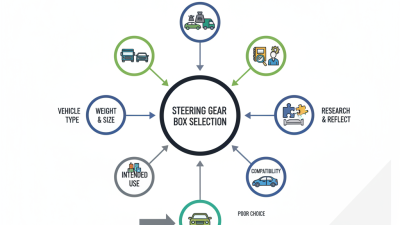
Several factors play a role in this decision. The vehicle type, driving conditions, and personal preferences all influence the choice. A mismatch can lead to steering issues or even accidents. Many overlook compatibility, which is vital.
Understanding specific needs is essential. While some may prefer a quick response, others might favor a smoother feel. This reflects personal driving styles. A moment of reflection can reveal that the best choice isn’t always the flashiest. It’s about the blend of comfort, safety, and performance.
Understanding Different Types of Car Steering Boxes: An Overview
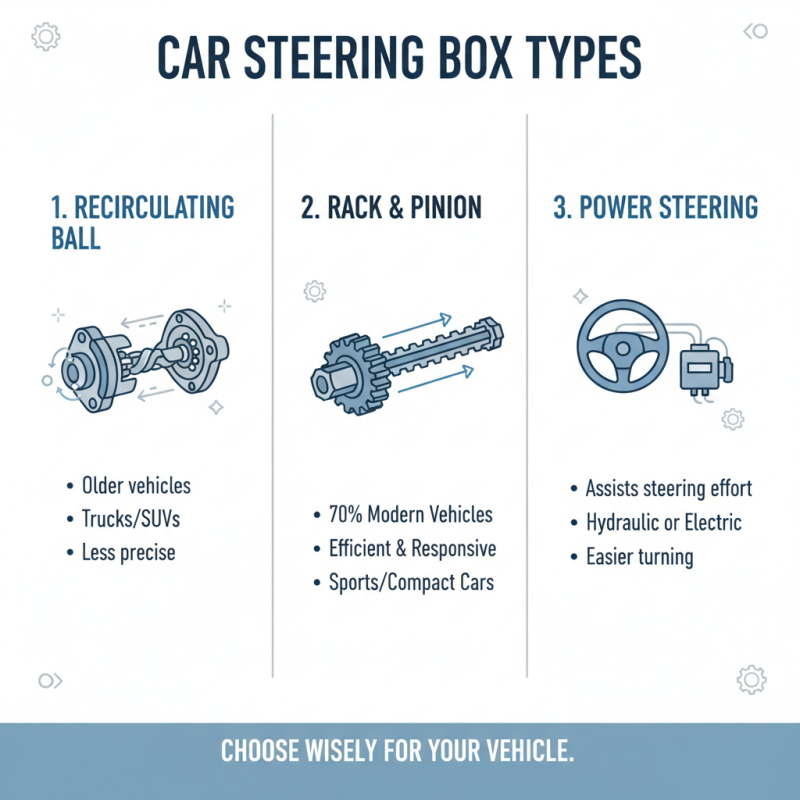
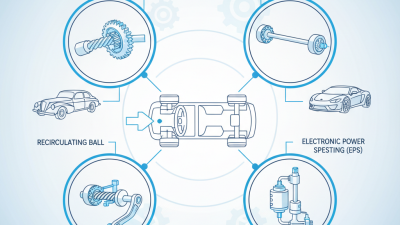
When it comes to car steering boxes, understanding the different types is crucial for any vehicle owner. There are primarily three types: recirculating ball, rack and pinion, and power steering systems. According to industry reports, about 70% of modern vehicles use rack and pinion steering due to its efficiency and responsiveness. It's lightweight and allows for better handling, making it a popular choice for sports cars and compact vehicles.
Recirculating ball systems, on the other hand, are often found in older vehicles and trucks. They tend to be bulkier and less efficient than modern alternatives. However, they provide a rugged feel that some drivers prefer. Interestingly, nearly 30% of classic car enthusiasts still opt for this type. Each type has its pros and cons, and understanding these can lead to better purchasing decisions.
Power steering systems enhance the ease of steering, which is beneficial for larger vehicles. Despite their advantages, they can sometimes lead to oversteering, making drivers feel less connected to the road. Research indicates that about 25% of drivers experience a disconnect when using these systems. Recognizing the strengths and weaknesses of each type is vital in meeting your driving needs.
Key Factors to Consider When Selecting a Steering Box for Your Vehicle
Choosing the right car steering box is crucial for vehicle performance. Several key factors can influence your selection. One important element is the type of steering system your vehicle uses. There are conventional and electric steering systems. Conventional systems often use a recirculating ball or a rack and pinion setup. Electric systems, however, are becoming more popular due to their efficiency.
Additionally, consider the pressure rating of the steering box. Data from the Automotive Research Council indicates that many steering boxes operate within a range of 1000 to 1500 psi. Ensuring compatibility with your vehicle’s specifications is vital. If the pressure rating is too low, steering response can be sluggish. If it’s too high, it may lead to premature wear.
Sizing is another factor. A steering box should match your vehicle's weight and dimensions. Larger vehicles may require beefier boxes. Ignoring size can result in poor handling and stability issues. Pay attention to your vehicle's intended use. Casual driving, towing, or off-roading may demand different features. Remember that selecting an incompatible steering box can lead to regrets later on. Always weigh the pros and cons before making a choice.
Evaluating the Impact of Steering Ratio on Driving Performance
Choosing the right steering box for your vehicle involves understanding the steering ratio. This ratio describes how many degrees the wheel turns in relation to the wheels. A lower ratio means quicker response, improving agility. Higher ratios offer more control at high speeds. This selection plays a crucial role in your driving experience.
Tips: Know your driving style. If you enjoy sporty handling, a lower ratio will suit you. For frequent highway cruising, a higher ratio can provide stability.
Steering ratios vary widely. A common ratio is 14:1, allowing for quick maneuvering. However, some vehicles use 20:1 or higher for stability. This difference can feel drastic. It’s worth test-driving vehicles with various ratios to feel the difference.
Tips: Take a test drive. Feel how each setting affects handling and comfort. Listen to your instinct while driving. Often, your gut will guide you toward the best choice.
Compatibility and Installation: Ensuring a Proper Fit for Your Car
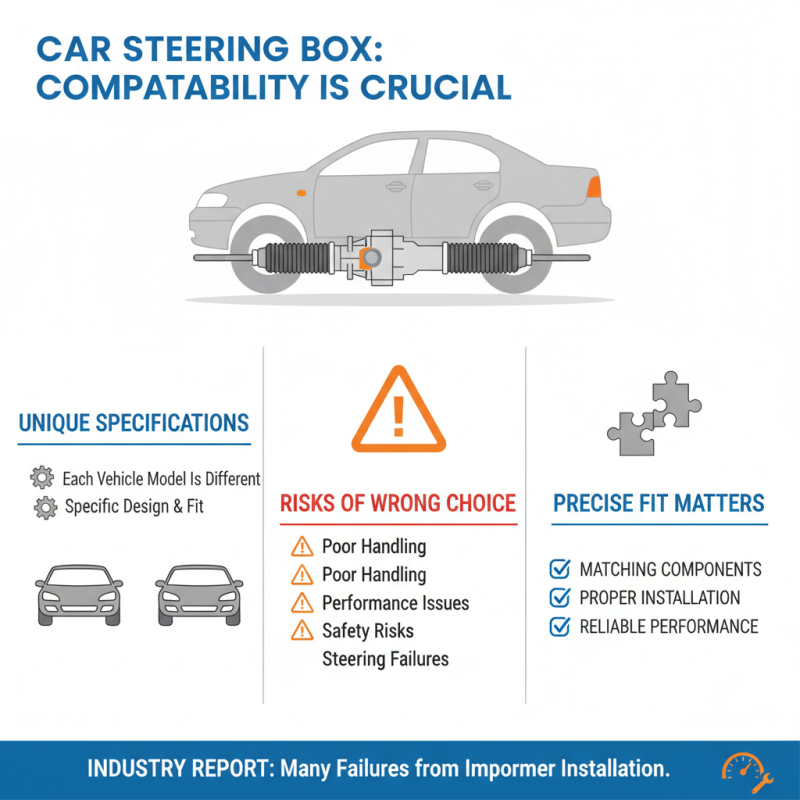
When choosing a car steering box, compatibility is crucial. Each vehicle model may have unique specifications. Using the wrong steering box can lead to performance issues, poor handling, and safety risks. According to industry reports, a significant number of steering failures stem from improper installations. This highlights the need for precise fits and matching components.
Tip: Always consult your vehicle’s manual for specific dimensions and requirements. Measuring the dimensions of your old steering box can help ensure compatibility. Remember, dimensions aren’t always universal across similar vehicle types.
Installation also plays a vital role in performance. A poorly installed steering box can cause excessive wear on components. Research indicates that nearly 30% of steering-related issues occur due to installation errors. Following the correct procedure is key to maintaining control and safety.
Tip: If you're uncertain, reach out to a professional for assistance. They can verify part compatibility and installation techniques for your specific vehicle. Ignoring these details may lead to costly replacements or worse, accidents.
Cost Analysis: Budgeting for Quality Steering Systems and Maintenance
When budgeting for a steering system, consider both the upfront and ongoing costs. Quality steering boxes can vary significantly in price. A high-quality steering box may cost more initially but could save money over time. Cheaper options might seem attractive but often lead to frequent repairs or replacements.
Maintenance is another crucial aspect. Regular inspection and servicing can prevent bigger issues. Skipping maintenance can lead to unexpected costs. For instance, a worn steering box can affect handling. This could result in safety hazards and higher repair costs later.
Think about the total cost of ownership. Invest wisely in a steering system that balances quality with price. It’s not just about what you pay today but also the expenses down the road. Spend time researching and reflecting on your choices before making a decision.