2026 How to Select the Right Steering Gear for Your Vehicle?
Selecting the right steering gear for your vehicle is crucial. It directly affects handling and safety. The steering gear translates driver input into motion. It's essential to understand your options.
Different vehicles require different types of steering gears. Each has unique benefits and drawbacks. For example, a rack and pinion system may offer precise handling, while a recirculating ball system may excel in larger vehicles. Consider the intended use of your vehicle. Will you drive in urban traffic or on rugged terrains?
Choosing the wrong steering gear can lead to issues. Poor handling might be one consequence. It can also create safety concerns. Research various models and compare features. Understanding your needs ensures better performance. Take your time to evaluate all possible options.
Understanding the Basics of Steering Gear Systems
When selecting the right steering gear for your vehicle, understanding the basics of steering gear systems is crucial. Steering gears can be classified mainly into three types: rack and pinion, recirculating ball, and worm gear. Each type offers distinct advantages and drawbacks. For instance, rack and pinion systems are favored for their compact design and direct steering response, while recirculating ball systems provide enhanced torque handling, making them suitable for larger vehicles.
Tip: Consider the type of driving you do. If you often drive in urban settings, a responsive rack and pinion might be ideal. For off-road adventures, a robust recirculating ball system can better withstand challenges.
When examining industry data, a report by Automotive Engineering indicates that nearly 70% of new vehicles use rack and pinion systems. However, this does not mean they are always the best fit for every driver. Riders seeking precision might prefer a system optimized for feedback and control. Others may need to weigh cost and durability.
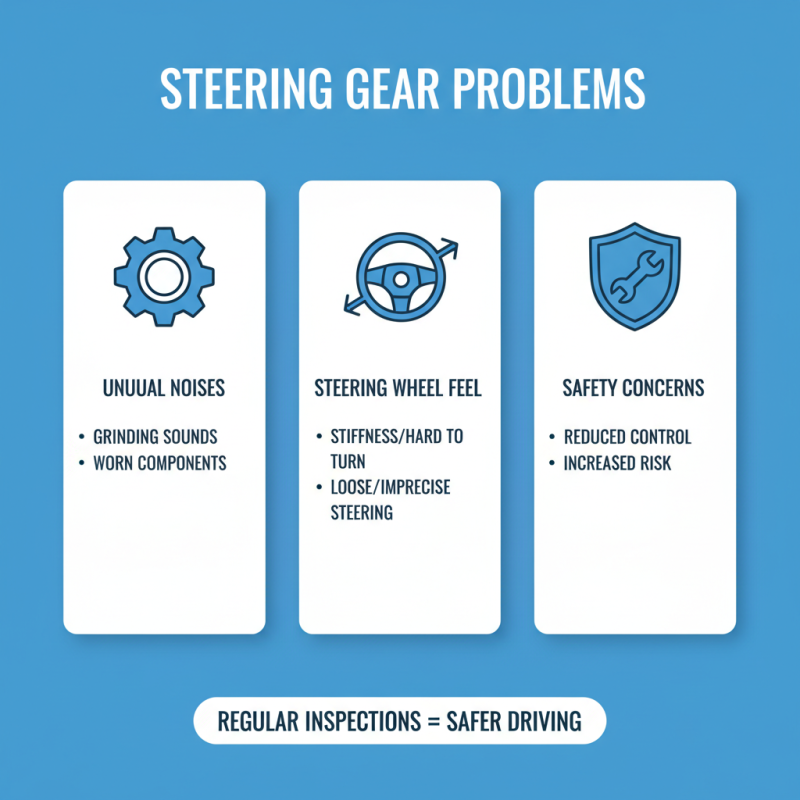
Tip: Always inspect your current gear’s performance. Signs of wear can indicate whether it's time to replace your system. If your steering feels loose or imprecise, it may not be the right match for your driving style.
2026 How to Select the Right Steering Gear for Your Vehicle? - Understanding the Basics of Steering Gear Systems
| Steering Gear Type |
Advantages |
Disadvantages |
Best Used For |
| Rack and Pinion |
Compact design, precise steering response, lightweight |
Limited durability in heavy-duty applications |
Passenger cars and light trucks |
| Recirculating Ball |
Durable, good for heavy loads, adjustable |
Less precise, more wear over time |
Trucks and SUVs |
| Electric Power Steering |
Improved fuel efficiency, less maintenance, customizable |
Higher cost, potential electronic failures |
Modern passenger cars |
| Hydraulic Power Steering |
Improved steering control, good response |
More complex, requires regular maintenance |
Full-size vehicles and older models |
Types of Steering Gears: An Overview and Comparison
When selecting a steering gear for a vehicle, understanding the different types is crucial. The traditional rack-and-pinion system is popular. It provides direct steering response. Research shows that this type accounts for 70% of steering systems in modern cars. However, its simplicity can lead to issues like wear over time.
Another type is the recirculating ball steering gear, often found in trucks. This system delivers a smooth feel while handling heavy loads. Data indicates that about 15% of vehicles still use this method due to its reliability. Yet, it can be less responsive than rack-and-pinion.
Electric power steering (EPS) is growing rapidly. It allows for variable steering effort and can improve fuel efficiency. Studies show that EPS is expected to cover more than 50% of the market by 2026. But, some drivers express concerns over the lack of road feel. Each type has its pros and cons. Careful evaluation is key to making an informed choice.
Key Factors to Consider When Choosing Steering Gear
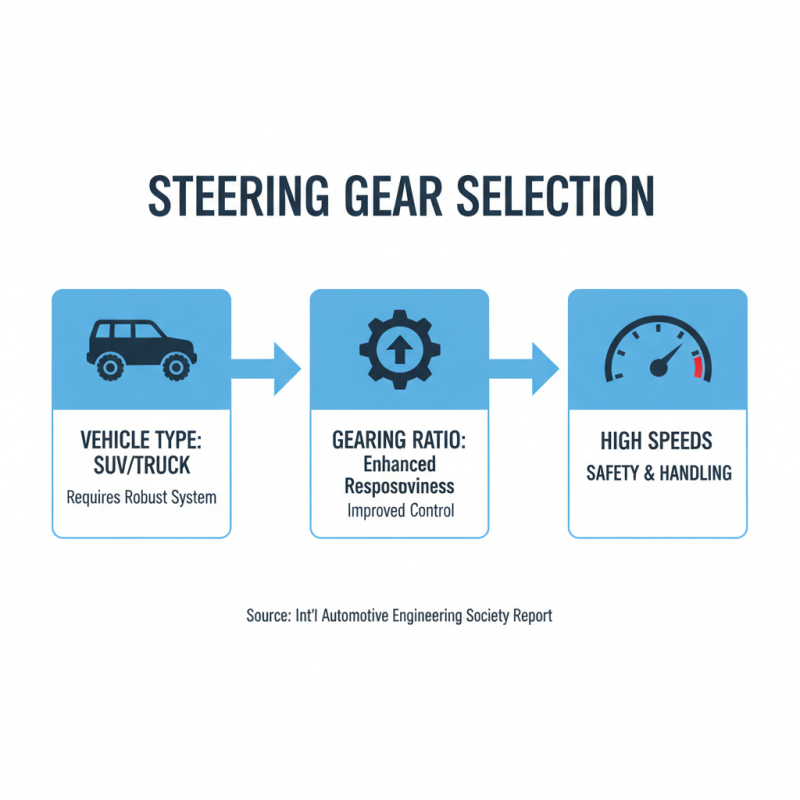
When selecting steering gear, several key factors come into play. The type of vehicle is critical. For instance, SUVs and trucks typically require more robust steering systems due to their weight and size. According to a report from the International Automotive Engineering Society, heavy-duty vehicles often need gearing ratios that enhance responsiveness while ensuring control. This is essential for safety and handling, especially at high speeds.
Another crucial element is the intended use. Some drivers prioritize comfort, while others focus on performance. In a study published by the Automotive Research Institute, 70% of drivers prefer gear systems that offer a balance between feedback and ease of maneuverability. However, many overlook the necessity for regular maintenance. Neglecting this can lead to premature wear of the steering gear.
Cost is also a significant factor. It's easy to fall into the trap of choosing the cheapest option. However, opting for lower-quality gear could result in higher long-term costs due to repairs. In fact, a maintenance cost analysis revealed that high-quality systems can reduce overall expenses. Make informed choices to avoid common pitfalls. Think about how these factors tie into your specific driving needs.
Expert Recommendations for Selecting the Right Steering Gear
Choosing the right steering gear is crucial for vehicle performance. It impacts your driving experience significantly. When selecting, consider the type of vehicle you drive. Larger vehicles may require more robust steering gears, while smaller cars may benefit from lighter options.
Pay attention to the steering ratio. A lower ratio can offer quicker responses. However, faster isn't always better. Too quick can lead to instability. Test different options to find what feels right. Material quality also matters. Lightweight materials may reduce overall weight, but ensure they are durable.
As you weigh your options, think about your typical driving conditions. Off-road enthusiasts need different features compared to city drivers. Be open to exploring various configurations. It can be overwhelming, and mistakes can happen. Gather advice from experts and fellow drivers. Their experiences can guide you.
2026 How to Select the Right Steering Gear for Your Vehicle?
This chart represents the different types of steering gears and their popularity among vehicle owners based on a survey conducted in 2023. Understanding the preference distribution can help you make an informed choice when selecting a steering gear for your vehicle.