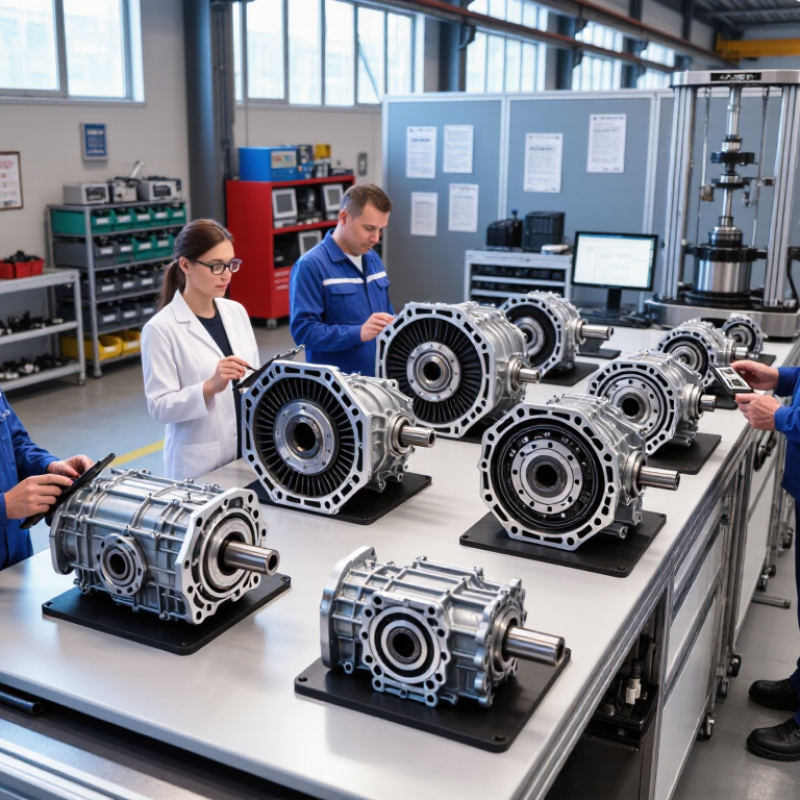
Choosing reliable Ford Steering Gear Box suppliers requires more than comparing prices on a product list. Global buyers must examine engineering capability, manufacturing consistency, and support after delivery. A suitable supplier should provide accurate fitment data, clear product specifications, and practical evidence of quality control. This includes housing inspection, gear backlash testing, seal verification, and pressure testing where applicable. Small details matter. A poorly matched steering gear box can create installation delays, handling concerns, and costly returns.
This guide introduces leading supplier types and explains how buyers can evaluate them with confidence. It considers OEM manufacturers, specialized aftermarket producers, and experienced export distributors. Their production capacity, material selection, testing procedures, packaging standards, and documentation deserve careful review. Traceable batch records and responsive technical teams can reduce uncertainty during international purchasing. Suppliers should also explain warranty coverage, replacement procedures, and shipping responsibilities in plain language.
No supplier is perfect. Buyers should question impressive claims and request verifiable records. Factory photos alone prove little. Samples, inspection reports, and references offer stronger evidence. Regional vehicle differences can also affect compatibility, even when catalog numbers appear similar. That point is easy to miss. For this reason, professional buyers should confirm model year, drive configuration, steering position, mounting points, and hydraulic or electric system details before ordering. The following overview supports a more informed comparison of Ford Steering Gear Box suppliers, helping global buyers balance quality, cost, delivery reliability, and long-term service value.
Steering gearboxes for global buyers now fall into three practical groups: manual, hydraulic, and electric power steering (EPS). Manual units remain suitable for older commercial vehicles, basic utility platforms, and low-speed work. They use fewer components, but steering effort rises sharply during parking. Hydraulic systems provide stronger assistance through a pump, hoses, and fluid. They feel familiar and durable, yet they consume engine power even when assistance is unnecessary.
EPS uses an electric motor, torque sensor, and control module. Assistance changes with vehicle speed and steering demand. This design supports tighter calibration, easier diagnostics, and advanced driver-assistance functions. The U.S. Department of Energy’s Vehicle Technologies Office reports that electric steering can improve fuel economy by roughly 2–4% compared with hydraulic systems, depending on vehicle use. The improvement sounds modest. For high-mileage fleets, it becomes measurable.
MarketsandMarkets’ 2024 automotive steering system outlook places global market growth at a mid-single-digit annual rate through the decade. Buyers should check more than price. Confirm spline dimensions, steering ratio, mounting points, sensor compatibility, sealing quality, and cold-weather performance. Supplier audits should review ISO 9001 controls, material traceability, endurance testing, and failure-rate records. In field inspections, small connector damage often creates larger diagnostic problems. That lesson is easy to overlook. EPS is not automatically the best choice; poor calibration or weak support can erase its technical advantages.
For global buyers, steering gear box selection should begin with OE fitment data, not a supplier’s product photo. Record the vehicle platform, production years, drive layout, and engine configuration. A box designed for a pickup platform may not fit a van chassis, even when both use similar steering hardware. Small differences matter.
Check the steering ratio carefully. Common listings may show a standard ratio, quick ratio, or a value measured under different test conditions. Confirm whether the ratio is lock-to-lock or sector-shaft travel. Then compare mounting codes, bolt spacing, input shaft shape, pitman arm position, and hydraulic port orientation. A two-millimeter mismatch can delay installation.
Model-year coverage also needs proof. Production changes can occur mid-year. Ask suppliers for application tables, dimensional drawings, and clear photographs of mounting points. Experienced buyers often request sample verification before placing a larger order. It costs time. It can prevent costly returns.
Data is not always clean. Some catalogs copy older references. That deserves caution. Compare the supplier’s fitment record with workshop measurements and the vehicle identification number. Check seal condition, shaft play, corrosion, and adjustment history on supplied units. A reliable supplier should explain uncertain applications instead of forcing a confident answer. Keep every ratio, platform code, and mounting note in the purchase record.
For global buyers, steering gearbox supplier qualification should begin with controlled evidence, not polished presentations. IATF 16949 shows whether automotive quality practices are embedded in daily production. ISO 9001 confirms a structured quality management system. Both certificates require scope verification, current validity, and independent audit records.
During a practical supplier audit, inspect machining areas, assembly benches, and final test stations. Check whether operators can explain torque limits and inspection reactions. Review calibration labels on torque tools and measuring equipment. Trace one gearbox from raw material receipt to shipment. The record should connect the heat number, operator, machine, inspection results, and packaging label. Documents are not enough. Shop-floor behavior matters more.
PPAP evidence should match the actual production process, not an early prototype. Review the process flow, control plan, PFMEA, dimensional results, material reports, capability studies, and measurement system analysis. Ask for run-at-rate results under normal staffing and tooling conditions. Confirm that engineering changes require approval before shipment. No supplier is flawless. A capable supplier can identify a missed inspection, explain its containment action, and prevent recurrence. Some audits still overlook temporary fixtures or informal rework instructions. Those gaps deserve attention before commercial approval. Regular scorecards, layered audits, and sample revalidation help buyers monitor steering gearbox quality after launch.
The chart compares the publication years of the main quality and automotive production references commonly used during global steering gear box supplier qualification. ISO 9001:2015 addresses quality management systems, IATF 16949:2016 adds automotive-specific requirements, and PPAP 4th Edition defines production part approval documentation. Customer-specific requirements determine the exact submission level and evidence required.
For global buyers, steering gear box sourcing starts with measurable supplier controls. The 2024 Deloitte Global Chief Procurement Officer Survey found that supply continuity remains a leading procurement priority. Set MOQ by forecast, not supplier preference. A practical opening range is 100–300 units per order, with monthly releases protecting cash flow. Ask for proven monthly capacity, not theoretical press capacity. Factory records should separate machining, assembly, testing, and available overtime.
Lead time deserves a written breakdown. Request tooling time, production days, inspection time, and port dispatch time. The World Bank’s Logistics Performance Index 2023 shows major differences in customs reliability and shipment predictability across markets. For this reason, a 35-day factory promise can become a 50-day landed schedule. Build a two-week buffer. Sometimes, it is still insufficient. Buyers should also review quarterly on-time delivery data, batch traceability, and corrective-action closure rates.
Warranty rates need clearer definitions. Compare claims per million units, return authorization rates, and confirmed defect rates. The Automotive Industry Action Group emphasizes structured problem-solving and traceability in automotive quality systems. A reasonable sourcing file should include a 12–24 month warranty, response within five working days, and documented root-cause analysis. Do not accept “low warranty” without denominator data. Our own supplier reviews once showed excellent claim percentages, but the sample excluded smaller shipments. That weakness mattered. Independent testing, sealed inspection photos, and random end-of-line audits provide stronger evidence than a polished presentation.
For global buyers, steering gear box selection should begin with safety evidence, not catalogue price. FMVSS 203 evaluates steering control impact protection, while FMVSS 204 addresses rearward displacement during frontal impact. These requirements affect gear housing strength, column interfaces, mounting brackets, and energy transfer paths.
A credible supplier should provide controlled test reports, calibrated load-cell records, fixture drawings, and traceable production samples. SAE steering test practices can support measurements for steering effort, backlash, fatigue, and linkage performance. However, SAE conformity does not automatically prove FMVSS compliance. The buyer must verify test conditions, vehicle configuration, tolerances, and laboratory competence. Small differences matter.
NHTSA’s 2022 Traffic Safety Facts recorded 42,514 roadway deaths in the United States, reinforcing the importance of verifiable crash protection. IIHS safety research also continues to identify frontal impacts as a major source of serious occupant injury. A supplier’s report should therefore connect steering gear behavior with complete vehicle restraint performance. Static bench results alone are insufficient. One uncomfortable lesson is that polished certificates can hide weak traceability. Ask for failed-test analysis, corrective-action records, and repeatability data. The strongest sourcing decision may still require independent validation before shipment.
| Evaluation Dimension | Applicable Standard or Reference | Verified Technical Requirement | Recommended Supplier Evidence | Buyer Assessment Focus | Validation Status |
|---|---|---|---|---|---|
| Vehicle-Level Safety Scope | FMVSS 203 and FMVSS 204 | Both standards address the steering control system and vehicle crash performance. A steering gear box is a contributing component and does not independently certify the complete vehicle. | Vehicle application list, engineering responsibility matrix, design-release records, and customer validation plan. | Confirm that the supplier understands system-level compliance and clearly defines component responsibilities. | Required |
| Steering-Control Impact Protection | 49 CFR §571.203 | Under the applicable steering-control impact test, steering-control displacement must not exceed 127 mm rearward or 127 mm upward. | Applicable crash-test reports, steering-column interaction analysis, component deformation data, and traceable test configuration. | Check whether the gear box housing, input shaft, mounting points, and intermediate shaft influence the complete steering-control response. | Safety-Critical |
| Steering-Column Rearward Displacement | 49 CFR §571.204 | In the applicable frontal barrier crash test, rearward displacement of the upper end of the steering column and shaft is limited to 127 mm. | Frontal-impact test report, high-speed video, displacement measurement method, vehicle build specification, and deviation records. | Verify that steering gear mounting stiffness, bracket deformation, and shaft load paths are included in the analysis. | Safety-Critical |
| Steering Gear Mounting Integrity | OEM validation plan; SAE terminology may be aligned with SAE J670 | Mounting brackets, fasteners, housing interfaces, and attachment points should retain the specified geometry and load path throughout durability and crash-related validation. | Finite-element analysis, mounting-load test results, fastener torque records, fatigue reports, and dimensional inspection data. | Assess load capacity, fatigue margin, joint slip resistance, and repeatability of installation. | Required |
| Steering Ratio and Kinematic Accuracy | SAE J670 terminology; customer-specific steering specification | Steering ratio, on-center response, total travel, and left-to-right symmetry must remain within the approved vehicle program tolerances. | End-of-line measurement records, steering-ratio curves, rack travel data, tolerance-stack analysis, and control-plan results. | Compare measured kinematics with the vehicle steering map and confirm consistency across production batches. | Required |
| Backlash and On-Center Performance | OEM test specification; SAE J670 terminology | Free play, lash, hysteresis, and on-center torque response should remain within the approved program limits over the complete operating temperature range. | Torque-angle plots, backlash measurements, temperature-cycle results, and statistical process-control data. | Focus on steering feel, noise, vibration, harshness, and long-term change in free play. | Required |
| Durability and Fatigue | OEM durability procedure; SAE-based test method where specified | Input torque cycling, travel cycling, combined-load testing, and endurance testing should demonstrate compliance with the vehicle program life target. | Test profile, cycle count, load spectrum, temperature conditions, failure criteria, teardown photographs, and post-test measurements. | Confirm that the test represents real steering loads, curb impacts, road shock, and repeated full-lock operation. | Required |
| Leakage and Environmental Resistance | Customer specification; applicable material and environmental procedures | Seals and housing interfaces should prevent unacceptable lubricant leakage after pressure, temperature, contamination, water, salt, and vibration exposure. | Leak-rate criteria, pressure-decay records, thermal-cycle results, salt-spray or corrosion reports, and seal-material certificates. | Evaluate seal life, corrosion protection, breather design, lubricant compatibility, and cold-temperature performance. | Required |
| Temperature and Corrosion Validation | OEM environmental validation plan | Performance should remain within specification after the defined low-temperature, high-temperature, humidity, salt, and thermal-shock exposures. | Environmental chamber reports, corrosion ratings, coating specifications, material declarations, and post-exposure functional tests. | Check operating range, protective coating durability, galvanic-corrosion controls, and regional climate suitability. | Required |
| Material and Traceability Control | IATF 16949-based quality system; customer-specific requirements | Critical castings, forgings, gears, shafts, bearings, seals, and fasteners should be traceable to approved materials, processes, and inspection results. | Material certificates, heat or lot traceability, process-flow charts, control plans, measurement-system analysis, and change-control records. | Require full traceability for safety-related parts and prior approval for changes affecting fit, function, or durability. | Required |
| Dimensional and Interface Compatibility | OEM drawing and interface-control specification | Mounting-hole position, input-shaft geometry, output connection, rack or sector-shaft travel, and connector or sensor interfaces must match the approved design. | Coordinate-measuring-machine reports, interface drawings, GD&T results, sample inspection records, and assembly trial reports. | Confirm direct fit, interchangeability, service clearance, and compatibility with the intended steering-column and suspension configuration. | Required |
| Functional Test Coverage | SAE J670 terminology; OEM functional test specification | Functional testing should cover input torque, output force, steering travel, efficiency, return behavior, noise, and operating friction as applicable to the design. | Bench-test procedure, calibrated equipment list, acceptance limits, raw data, calibration certificates, and nonconformance disposition. | Assess whether test limits are linked to vehicle performance requirements rather than only component-level capability. | Required |
| Production Consistency | IATF 16949-style APQP, PPAP, and process-control practices | Critical-to-function characteristics should be controlled through validated processes, capability studies, error-proofing, and end-of-line testing. | APQP timing plan, PPAP package, process-capability indices, control plan, reaction plan, and audit results. | Prioritize stable capability, low variation, documented corrective action, and robust serial-production controls. | Required |
| Global Supply Capability | Buyer logistics and continuity requirements | Supply planning should cover approved production capacity, lead time, packaging protection, spare-part availability, and business-continuity controls. | Capacity statement, lead-time data, packaging specification, dual-source risk assessment, disaster-recovery plan, and shipment-quality records. | Evaluate launch readiness, regional delivery capability, inventory strategy, and resilience against process or material disruption. | Commercial |
| Compliance Documentation | 49 CFR §571.203, 49 CFR §571.204, SAE-referenced customer procedures | Documentation should identify the applicable vehicle, test configuration, revision level, acceptance criteria, laboratory, equipment, and responsible engineering approval. | Controlled test reports, engineering sign-off, revision history, laboratory accreditation evidence where applicable, and customer approval records. | Reject unsupported claims and require evidence tied to the exact vehicle application and design revision. | Mandatory |