2026 Top Steering Gear Box Suppliers for Global Buyers?
Choosing a Steering Gear Box supplier in 2026 takes more than comparing catalog prices. Buyers need to understand the application, operating conditions, and support available after delivery. A unit used in a commercial truck faces different demands from one fitted to a passenger car or agricultural machine. Shaft dimensions, mounting points, gear ratio, sealing, and material quality all deserve careful review. Small mismatches can mean costly delays.
W. Edwards Deming, a quality management expert, is often quoted as saying, “Quality is everyone’s responsibility.” That principle applies to steering components: reliable supply depends on design, production control, inspection, and clear communication. For this guide, supplier comparisons should consider documented quality processes, product range, customization capability, lead times, warranty terms, and technical support. Ask for test information and relevant certifications, then confirm that they match your specific application. Details matter.
Global sourcing adds practical complications. Samples may look convincing, while long-term consistency remains unproven. A supplier’s response to a technical question can reveal as much as a polished catalog. There is no perfect shortlist. Buyers should verify claims directly and check references where possible. The rankings ahead are intended to help narrow the field, not replace engineering review. A careful comparison can reduce risk, though it cannot remove every uncertainty.
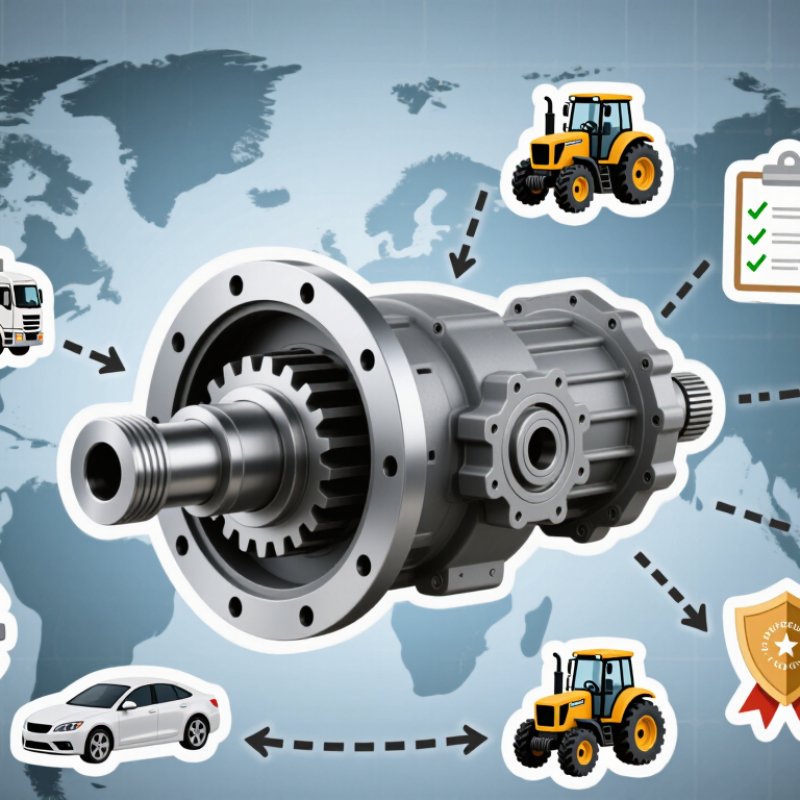
What a Steering Gear Box Is and How It Works
A steering gear box converts steering-wheel rotation into controlled movement at the road wheels. Inside a recirculating-ball design, a worm shaft moves a ball nut, which turns a sector shaft and pitman arm. Many passenger cars instead use rack-and-pinion steering: a pinion moves a toothed rack linked to the wheels. The distinction matters. A supplier’s part must match the vehicle’s steering layout, mounting points, and operating loads.
Power assistance reduces driver effort. Hydraulic systems use pressurized fluid to help move the steering mechanism; electric systems use a motor and sensors to add assistance as needed. In either design, tie rods transfer movement to the wheels. Small faults can feel obvious: a clunk over a curb, uneven steering effort, or excess free play. Yet diagnosis is not always straightforward. Worn joints can imitate gear-box problems. OICA’s 2024 production statistics report about 92.5 million motor vehicles produced worldwide, underscoring the scale of varied vehicle applications and replacement needs. That figure describes production, not steering-unit demand. For buyers, fitment records, material specifications, testing procedures, and clear service data are more useful than a broad market claim. A quiet test-bench result helps, but real road conditions still matter.
How a steering gear box works: It converts steering wheel rotation into movement of the steering linkage. This illustrative chart uses a 16:1 gear ratio: each 16 degrees of steering wheel rotation corresponds to 1 degree of sector shaft rotation. Values are calculated examples, not specifications for a particular vehicle or supplier; actual travel is limited by the steering system.
Key Steering Gear Box Types and Applications
Steering gear boxes convert movement at the steering wheel into controlled motion at the road wheels. Rack-and-pinion systems are common in passenger cars and light vans. Their compact layout and direct feel suit tight engine bays and everyday driving. Fit matters. Gear ratio, mounting points, and input-shaft dimensions must match the vehicle.
Recirculating-ball steering gears use a ball-bearing mechanism to reduce friction. They are often selected for trucks and heavier vehicles, where steering loads are higher. Worm-and-sector or worm-and-roller designs appear in some older vehicles and specialized machinery. These units can tolerate demanding conditions, but may feel less precise than modern rack systems. Not always a simple swap.
Applications shape the choice. Off-road equipment may need a sealed housing, durable bearings, and protection from mud or impact. Industrial vehicles often benefit from a design that can handle repeated low-speed turns. Hydraulic or electric assistance can reduce driver effort, yet it does not replace the need for a correctly sized gear. A specification sheet helps, but real operating loads, temperature, and service access matter too. One detail is easy to miss: a unit that fits physically may still have the wrong steering ratio.
How to Evaluate Leading Steering Gear Box Suppliers in 2026
When evaluating steering gear box suppliers in 2026, begin with the application, not the sales brochure.
A polished brochure is not proof. Confirm the gear type, input torque, steering ratio, mounting dimensions, and operating conditions your equipment requires. Ask for current drawings and measurable inspection criteria. If a supplier cannot explain how critical dimensions are checked, treat that as a gap to investigate.
Request evidence of material traceability, production controls, and testing relevant to your design. For example, ask how backlash, noise, and load performance are assessed, and whether test records can be linked to a production batch. Where possible, inspect a sample and compare it with the approved drawing. Small differences matter. A sample test cannot predict every field condition, so discuss validation limits openly.
Assess delivery reliability alongside engineering support. Ask how capacity changes are managed, what happens when a component fails inspection, and how quickly technical questions receive useful answers. Check whether spare parts and replacement units can be supplied over the equipment’s expected service life. No supplier will score perfectly; record the trade-off rather than smoothing it over. A slow response during quotation may be worth revisiting before production begins.
Supplier Capabilities, Certifications, and Global Market Coverage
A capable steering gear box supplier should show more than a polished catalogue. OICA reported 93.5 million motor vehicles produced worldwide in 2023, a reminder that buyers need dependable capacity and clear delivery plans. The IEA’s Global EV Outlook 2024 estimated nearly 14 million electric cars were sold that year. As vehicle designs change, ask suppliers to document fitment, durability testing, and traceability for each application. A certificate is not a field test.
Check whether quality systems are certified to IATF 16949 or ISO 9001, and request current certificates with their scope and expiry dates. ISO 14001 can help assess environmental management, but it does not prove product quality. For global coverage, verify export experience, packaging standards, local-language technical support, spare-part availability, and realistic lead times. Ask for a sample inspection report and clarify how production changes are communicated. I would still question any supplier promising the same delivery speed to every market; shipping routes and customs handling vary.
Tips: Compare suppliers using the same checklist. Request a measured sample, not just a brochure. Confirm the test conditions, batch traceability, and warranty response time in writing. Industry reports describe market scale, not individual supplier performance. That gap matters.
How Global Buyers Can Compare and Qualify Suppliers
For a steering gear box, compare suppliers against the same drawing, duty cycle, and acceptance limits.
OICA reported 92.5 million motor vehicles produced worldwide in 2024, highlighting the scale and complexity of automotive supply chains. Yet production volume alone cannot prove a supplier can meet your program’s needs. Small differences matter. Ask for documented controls on gear geometry, backlash, input torque, sealing, and material batches. Request test records under agreed temperature, load, and durability conditions—not just a sample that feels smooth by hand.
Use IATF 16949 certification as an initial quality-system screen, not as proof that a particular component will perform. Audit how nonconforming parts are contained, corrective actions are verified, and production changes are communicated. Then test it. Compare sample measurements with your specification and review repeatability across multiple units. Check capacity, tooling ownership, production-site location, lead-time assumptions, and contingency plans using your forecast. A low quotation can become expensive if inspection, freight, or rework is excluded. The OICA production figure describes the market, not your future demand; forecasts can be wrong. Ask suppliers to explain their assumptions, and record unresolved gaps before nomination.