Leave Your Message

How to Choose the Right Steering Gearbox?

Choosing the right Steering Gearbox is not simply a matter of comparing prices or browsing attractive product photos. It is a practical engineering decision that affects control, safety, efficiency, and maintenance. The correct choice depends on steering load, required torque, gear ratio, operating speed, mounting space, and environmental conditions. A gearbox used on a compact machine may fail quickly on a heavy vehicle or industrial system.

Experienced engineers usually begin with real operating data. Measure the steering force, shaft diameter, duty cycle, and available installation space. Check whether the system needs manual input, hydraulic assistance, or electric actuation. Pay close attention to backlash. Excessive play can make the steering feel vague, especially when the vehicle travels over uneven ground. Sealed housings, corrosion-resistant materials, and suitable lubrication also matter in wet, dusty, or coastal environments.

There is no universal best option.

Manufacturer specifications provide a reliable starting point, but they should not replace application testing. Compare rated torque with peak loads, not only normal loads. Confirm compatibility with shafts, couplings, brackets, and control components. An overlooked detail, such as a few millimeters of misalignment, can create vibration and premature wear. Even experienced buyers can miss this. A careful review with a qualified supplier or mechanical engineer can reveal practical problems before installation. This guide explains the main selection criteria, common mistakes, and useful checks for choosing a Steering Gearbox with greater confidence. Some decisions may still require adjustment after field testing. That is normal. Performance in real conditions often teaches more than a catalogue.
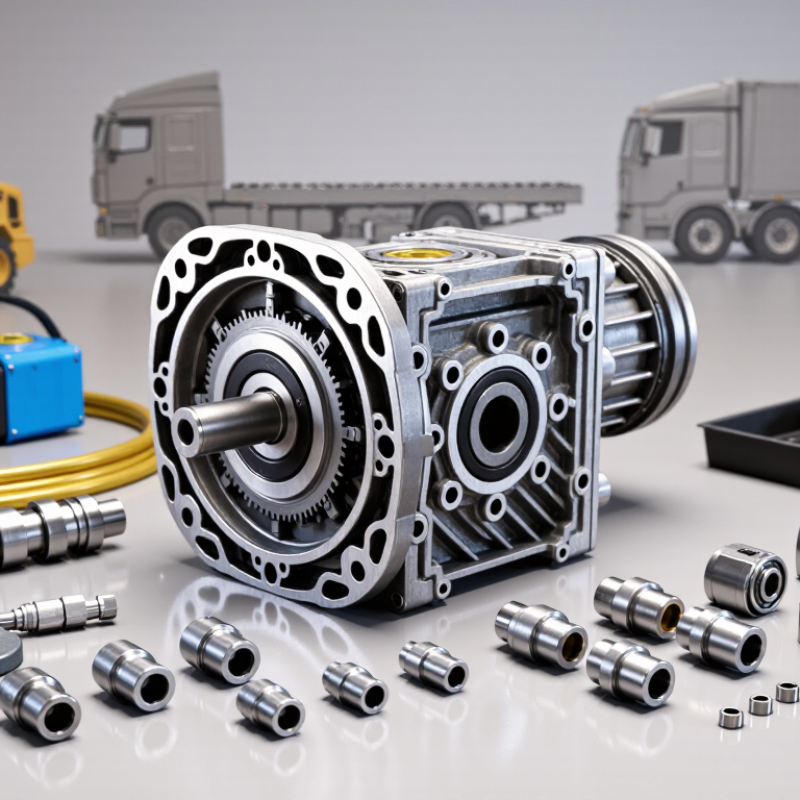
How to Choose the Right Steering Gearbox?

Define Vehicle Mass, Axle Load, and Tire Size Using SAE J670 Data

How to Choose the Right Steering Gearbox?

SAE J670 helps engineers describe vehicle motion and loading with consistent terminology. Start by recording the vehicle mass for the exact operating condition. Include the chassis, fluids, driver, payload, tools, and spare equipment. Do not rely only on the maximum rated mass. A gearbox selected from an empty-vehicle figure may feel weak when the vehicle is fully loaded.

Axle load needs equal care. Measure or calculate the front axle load, rear axle load, and their distribution under realistic conditions. Steering forces depend strongly on the load carried by the steered axle. Record static load, braking transfer, and uneven ground exposure when relevant. These details help estimate the gearbox input torque and required durability. I once treated the front axle rating as the normal load. That shortcut produced an overly cautious design and unnecessary weight.

Tire size also changes steering demand. Document section width, aspect ratio, rim diameter, construction, inflation pressure, and effective rolling radius. A wide tire can increase scrub resistance, especially on rough pavement. Low pressure may enlarge the contact patch and raise steering effort. SAE J670 supplies consistent vehicle-dynamics language, while tire data should come from measured specifications and controlled tests. Keep units consistent. Small errors matter. The chosen gearbox should match the worst credible load, not an imaginary extreme. Clearance, steering angle, backlash, and mounting stiffness still require physical verification. A calculation alone is not enough.
Calculate Required Steering Torque from Tire Friction and Front-Axle Load

How to Choose the Right Steering Gearbox?

Calculate Required Steering Torque from Tire Friction and Front-Axle Load

Choosing a steering gearbox starts with a realistic torque estimate. Measure the front-axle load, not the vehicle’s total weight. Divide this load between the two front tires. Then use this practical estimate: required road-wheel torque equals tire friction coefficient × front-axle load × scrub radius.

For example, assume a 9,000 N front-axle load, a friction coefficient of 0.8, and a 0.04 m scrub radius. The estimated steering torque is 288 N·m. This value describes both tires under static conditions. Add a safety factor, often between 1.5 and 2.5, because cold tires, uneven ground, and suspension angles increase resistance. The gearbox may therefore need to handle about 576 N·m or more.

Do not size it from this equation alone. Caster trail, kingpin inclination, tire deformation, and gearbox efficiency also matter. My early calculations often missed tire temperature. That mistake was expensive in testing.

Tips: Confirm the load with a scale. Measure scrub radius at the actual ride height. Test on dry pavement. Check peak torque during parking maneuvers. A torque sensor gives better evidence than a spreadsheet. Include gearbox efficiency when converting output torque to input torque. If the result feels uncertain, redesign the assumption before increasing gearbox size.

Select Steering Ratio Within the Typical 12:1–24:1 Automotive Range

How to Choose the Right Steering Gearbox?

Select Steering Ratio Within the Typical 12:1–24:1 Automotive Range

Steering ratio describes how far the steering wheel turns compared with the road wheels. A 16:1 ratio means 160 degrees at the wheel creates about 10 degrees at the road wheels. SAE J670 and ISO 8855 provide the technical language for measuring steering angle, wheel angle, and vehicle response. These standards help engineers compare test results consistently.

A 12:1 to 16:1 ratio usually suits responsive passenger cars. The driver gets quicker turn-in, with less hand movement during a lane change. It can feel nervous on rough roads, though. Ratios from 18:1 to 24:1 give smoother control and reduce steering effort, especially in larger vehicles. NHTSA’s 2023 vehicle safety guidance continues to emphasize predictable driver control, but it does not prescribe one steering ratio. That matters. Safety depends on the complete system, not one number.

Check the gearbox with the actual tire size, suspension geometry, and steering assist level. With a 20:1 ratio, a 20-degree road-wheel angle requires roughly 400 degrees of steering-wheel rotation. Measure it during low-speed parking and a 100-km/h lane-change test. Record steering effort, return-to-center behavior, and response delay. My practical mistake was choosing a faster ratio from specifications alone. The vehicle reacted sharply, but the driver had less room to correct. SAE J670 test terminology improves repeatability, yet real road feedback still deserves careful review.

Match Gearbox Load Capacity, Mounting, and Shaft Standards to the Vehicle

How to Choose the Right Steering Gearbox?

Choosing a steering gearbox starts with the vehicle’s real steering load, not its appearance. Check the axle weight, tire size, steering ratio, and operating conditions. A gearbox must handle continuous torque and sudden shock loads from potholes or uneven ground. Select a suitable safety margin, but avoid excessive capacity. An oversized unit can add weight and make steering response unnecessarily heavy. It sounds safer, yet it may create new problems. Review the manufacturer’s load ratings and service data carefully. If the vehicle carries changing loads, calculate the highest realistic condition rather than the average one.

Mounting and shaft compatibility deserve equal attention. Measure the bolt pattern, mounting face, housing clearance, and shaft centerline before ordering. Even a small offset can cause linkage misalignment and accelerated wear. Confirm the input and output shaft diameter, spline count, keyway style, and rotation direction. Do not rely on photographs. They hide critical differences. The steering ratio must also match the vehicle’s geometry and driver expectations. A workshop fitting should include checks for backlash, lubrication access, fastener torque, and interference through the full steering range. One detail is easy to miss: nearby components may contact the gearbox only at maximum suspension movement. Recheck that position. Careful measurement usually costs minutes; correcting a mismatched gearbox can cost far more.

Verify Backlash, Efficiency, Durability, and Safety Against ISO 9001 Practices

Choosing the right steering gearbox starts with evidence, not a catalog promise.

In field inspections, backlash often appears as a small delay at the wheel, then becomes unstable motion under load. Ask for measured values at several positions, including the neutral zone.

A clear inspection record should identify the method, equipment, operator, and acceptance limit. This supports ISO 9001 practices because decisions remain traceable and repeatable. Keep the test data.

Efficiency deserves the same discipline.

Compare input torque with useful output torque across the expected speed range. A gearbox may look efficient at one point and waste energy during frequent reversals.

Check lubrication condition, temperature rise, sealing, and abnormal noise after realistic operating cycles. Durability claims need more than a laboratory photograph.

Request endurance results, maintenance intervals, material information, and corrective action records. Evidence beats confidence.

Safety depends on controlled failure, not only smooth steering.

Verify load capacity, locking behavior, mounting strength, and response after power loss. Review risk assessments and change-control records within an ISO 9001 quality system.

Supplier competence matters, so examine calibration certificates, inspection training, and nonconformance handling.

I have seen checklists pass while mounting bolts loosened in service. That gap deserves honest review.

No test is perfect. Recheck assumptions before approval.